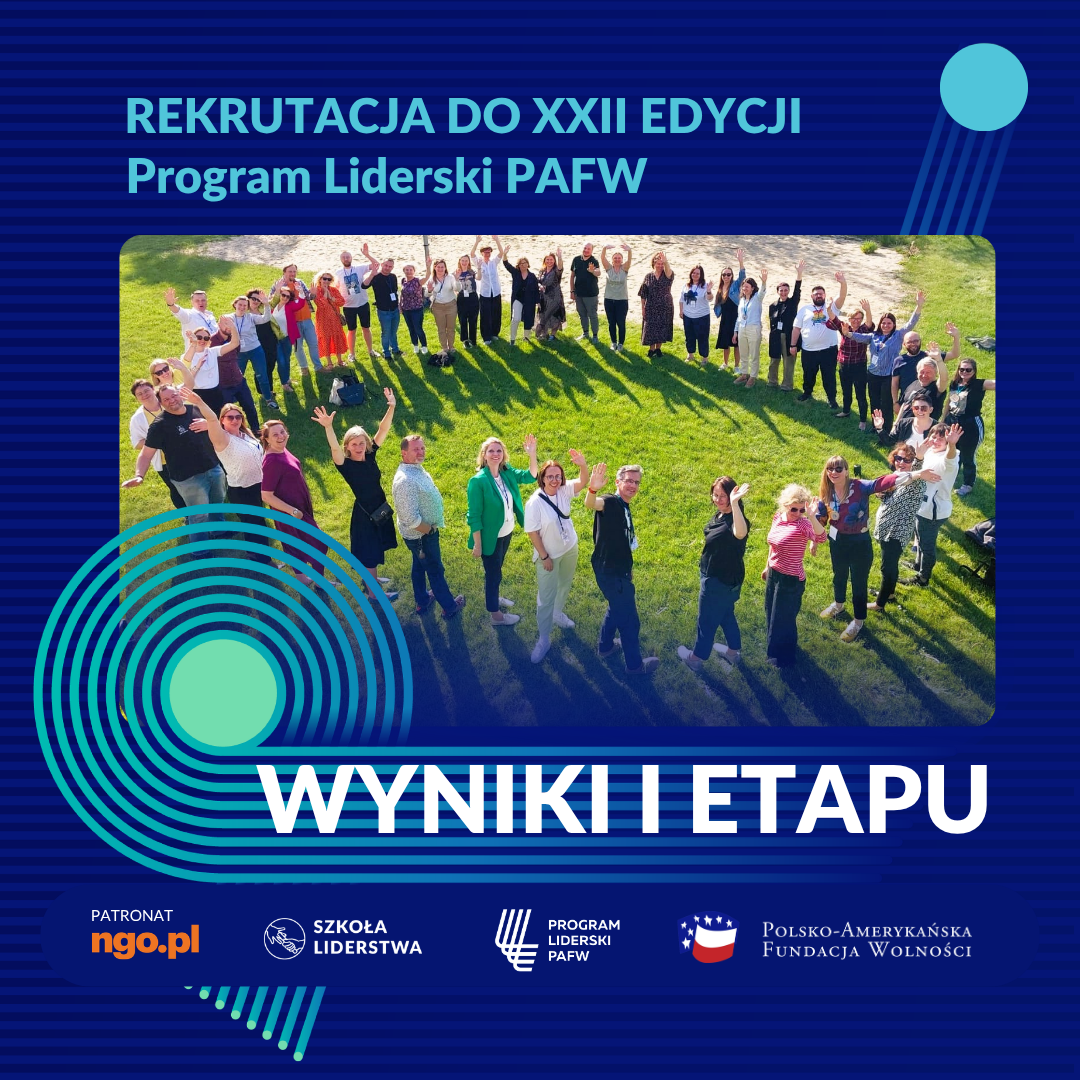
Prezentujemy wyniki I etapu rekrutacji do XXII edycji Programu Liderskiego PAFW. Na rozmowy zapraszamy 130 osób.
Po zapoznaniu się ze zgłoszeniami do XXII edycji Programu Liderskiego PAFW wybraliśmy 130 osób na rozmowy rekrutacyjne.
W związku z dużą ilością zgłoszeń Komisja rekrutacyjna postanowiła do II etapu przyjąć większą liczbę osób kandydujących. Do udziału w XXII edycji Programu przyjmiemy 40 osób.
Wszystkim osobom, które aplikowały, dziękujemy za zgłoszenia! To zawsze jest wielka przyjemność czytać o Was i Waszych działaniach. Wybór był naprawdę trudny.
Widzimy, że są osoby, które aplikują kolejny raz, jeśli nie udało się tym razem – prosimy, nie zniechęcajcie się!
Zdarza się nawet, że osoby próbują 4-5 razy – ostatecznie z pozytywnym skutkiem.
Zachęcamy i zapraszamy do udziału w innych programach Szkoły Liderstwa oraz Polsko-Amerykańskiej Fundacji Wolności.
Serdecznie gratulujemy i do zobaczenia!
Uwaga! Rozmowy do XXII edycji zaczynamy od wtorku 7.04. 2026 r. Sukcesywnie wysyłamy indywidualne maile z zaproszeniami na rozmowy. Sprawdzajcie też folder spam.
Program Liderski PAFW jest przedsięwzięciem Polsko-Amerykańskiej Fundacji Wolności realizowanym przez Szkołę Liderstwa im. Zbigniewa Pełczyńskiego.